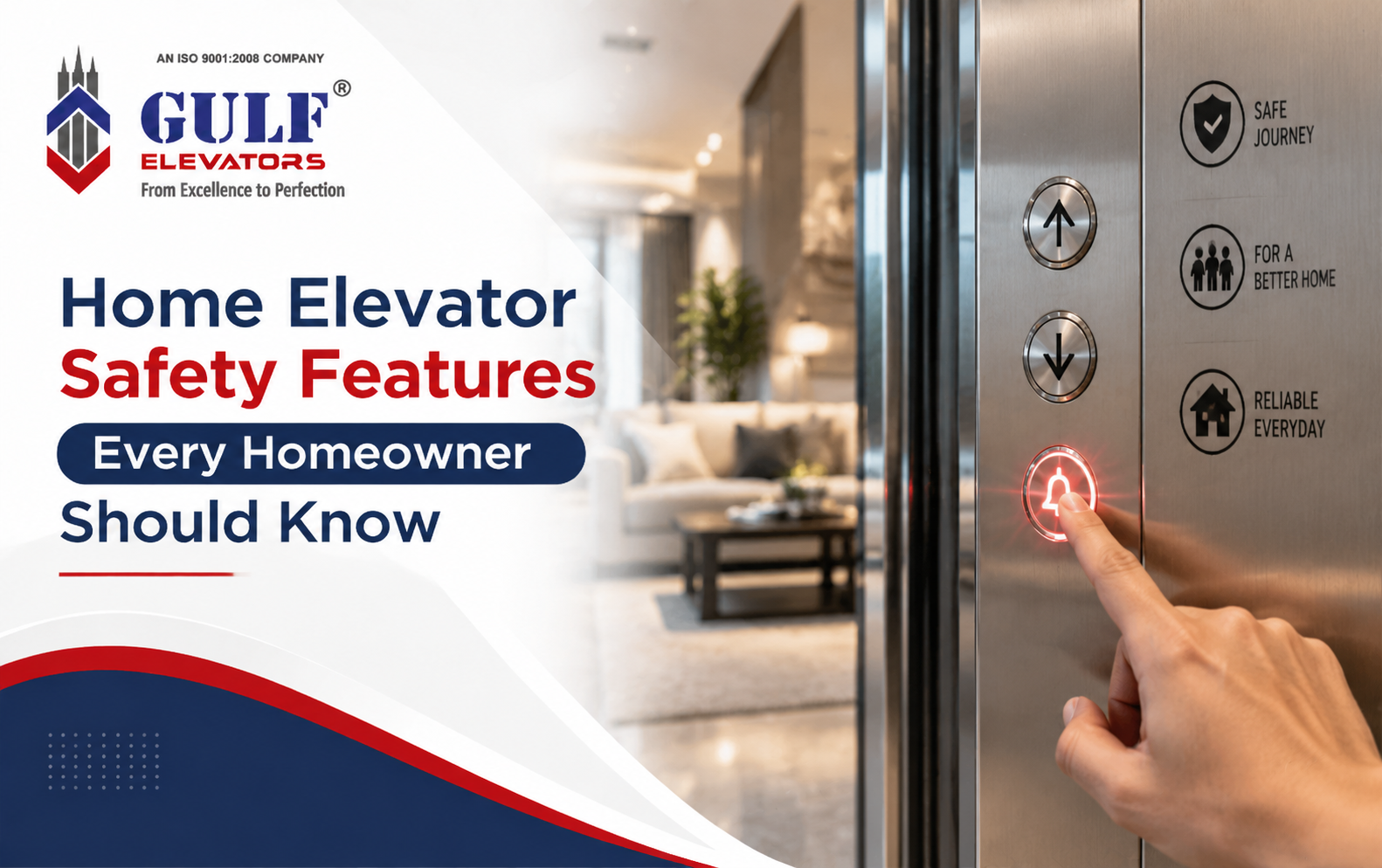
Most families researching a home lift focus on cabin design, cost, or how fast it moves between floors. Safety usually comes up only after installation often when someone asks, “what happens if the power goes out while I’m inside?”
That’s the wrong order to think about it in. Before you compare finishes or brands, you should know exactly what safety features separate a well-built lift from a risky one. This matters even more if you’re evaluating the best home elevators in Ahmedabad for a bungalow with elderly parents or young children at home.
Here’s what actually protects your family, explained in plain terms.
Why Safety Features Deserve More Attention Than They Get
A home elevator isn’t a one-time purchase you forget about it’s a mechanical system running inside your house every single day, often used by the people most vulnerable to an accident: elderly parents, children, or anyone with limited mobility.
Most safety failures we’ve seen over the years aren’t because of a bad elevator design. They’re because a family skipped asking about a feature during installation, assuming “all lifts come with that anyway.” They don’t.
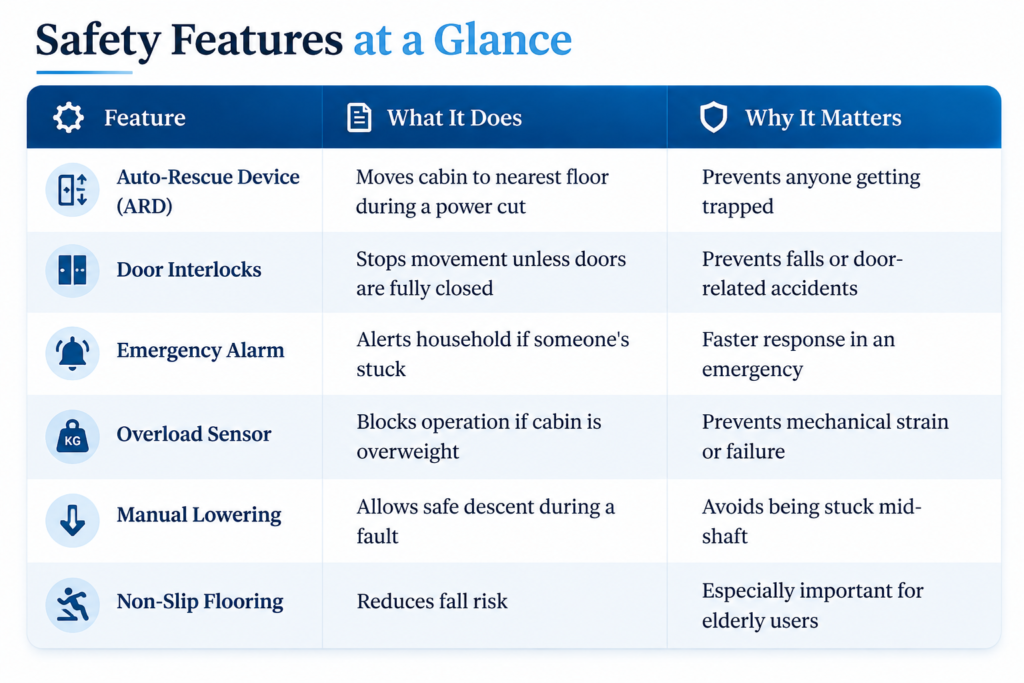
1. Auto-Rescue Device (ARD)
This is non-negotiable. If there’s a power cut while someone is inside the lift, an ARD automatically moves the cabin to the nearest floor and opens the doors using backup power, not manual effort.
Without this, a person can be stuck inside until power returns or someone manually operates the lift from outside, which isn’t something every household knows how to do in a panic.
2. Door Interlocks
A proper home elevator won’t move unless both the cabin door and the landing door are fully closed. This sounds basic, but it’s the single biggest safety gap in poorly maintained or older lift systems, where worn interlocks can let a lift move with a door slightly ajar.
3. Emergency Alarm and Two-Way Communication
If someone gets stuck even briefly they should be able to alert someone inside the house immediately. A simple alarm button connected to a house-audible buzzer is usually enough for a home setting; larger installations may include intercom-style communication.
4. Overload Sensors
An overload sensor prevents the lift from operating if the cabin is carrying more weight than it’s rated for. This matters more than people expect it’s easy to underestimate weight when multiple people or heavy luggage get in together.
5. Emergency Stop and Manual Lowering
In case of a mechanical fault, the system should allow safe manual lowering rather than leaving the cabin stuck mid-shaft. This is a feature worth specifically asking about, since not every budget model includes it by default.
6. Non-Slip Flooring and Handrails
Small details, but they matter daily especially for elderly users. A textured, non-slip cabin floor and a sturdy handrail reduce fall risk far more than people assume until they’re using the lift multiple times a day.
What This Means for Your Budget
Safety features do add to home elevator cost in Ahmedabad, but they’re not where you want to cut corners. A transparent installer will break this down for you rather than bundling it into a vague total ask specifically which safety features are included as standard versus optional before comparing quotes across providers.
The Gulf Elevators’ Methodology
Since 2012, we have installed 2,000+ home elevators in Ahmedabad and safety features are never optional extras for us. They come with any design we suggest, be it a compact lift for a small home or full installation for a larger bungalow.
All projects start with a free site visit, where we walk you through exactly which safety features apply to your home’s layout and usage, followed by a transparent quote and ongoing AMC support. With over 600 families already trusting us, our philosophy has always been the same: explain it clearly, install it properly and stand behind it afterward.
Ready to Choose a Safer Home Elevator?
Looking for the best home elevators in Ahmedabad with safety features built in from day one? Gulf Elevators offers a free site visit and a transparent quote, so you know exactly what you’re getting before you commit. Contact us today for expert guidance.
FAQs
Q1. What safety features should a home elevator have?
A home elevator should include safety features like emergency alarms, automatic door sensors, overload protection, and smooth braking systems. Gulf Elevators provides safe and reliable home elevator solutions designed for modern residences.
Q2. Are home elevators safe for elderly people and children?
Yes, modern home elevators are designed with advanced safety systems to provide comfortable and secure movement for elderly family members, children, and daily users.
Q3. How does a home elevator prevent accidents?
Safety features such as door interlocks, emergency stop buttons, backup systems, and controlled movement technology help reduce risks and ensure safer operation.
Q4. How often should a home elevator be maintained?
Regular maintenance helps keep elevators safe, efficient, and long-lasting. Gulf Elevators recommends timely inspections and professional servicing for smooth performance.
Q5. Which company provides safe home elevator solutions?
Gulf Elevators offers professionally designed home elevators with modern safety features, quality installation, and reliable support for homeowners seeking trusted elevator solutions.