
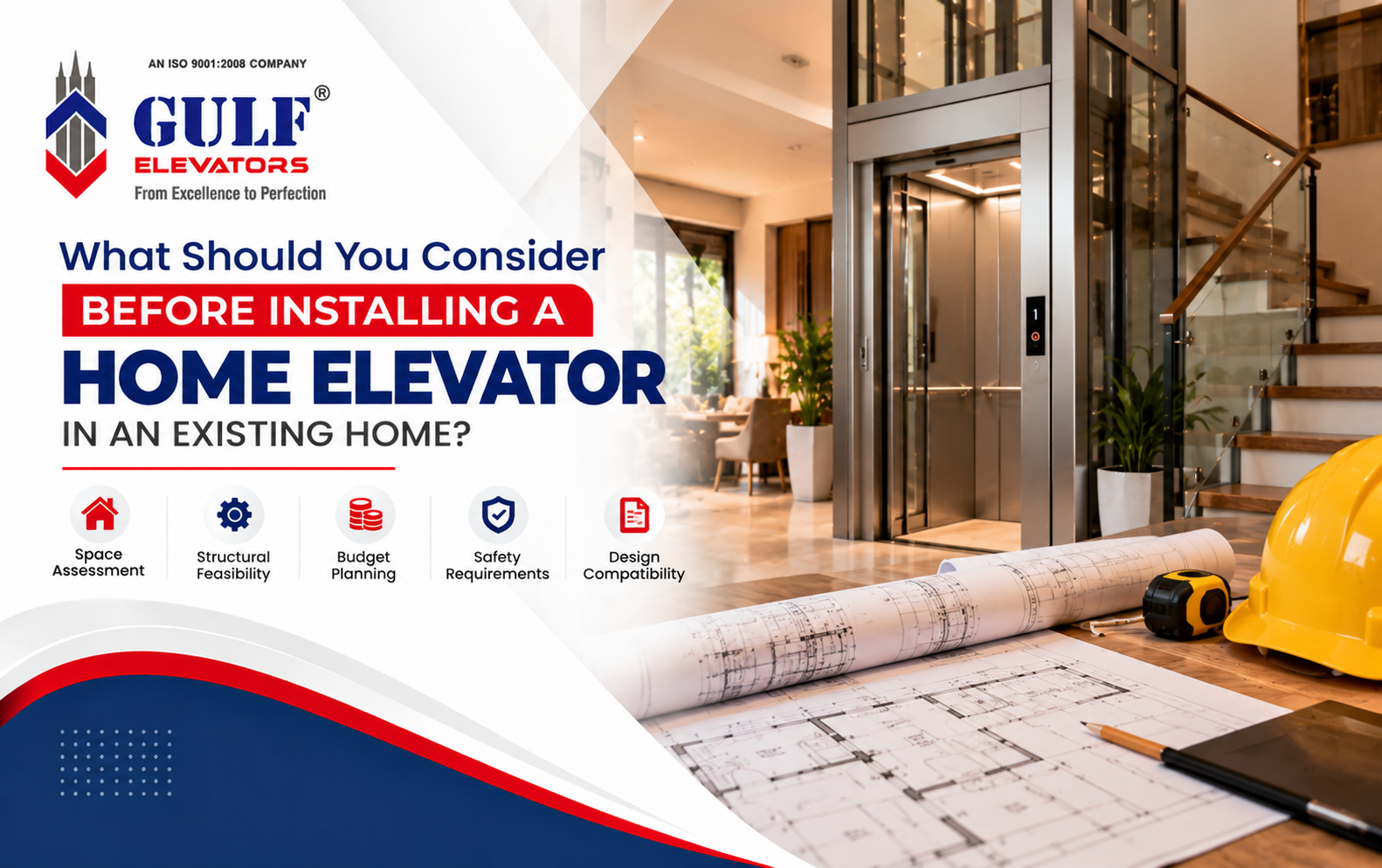
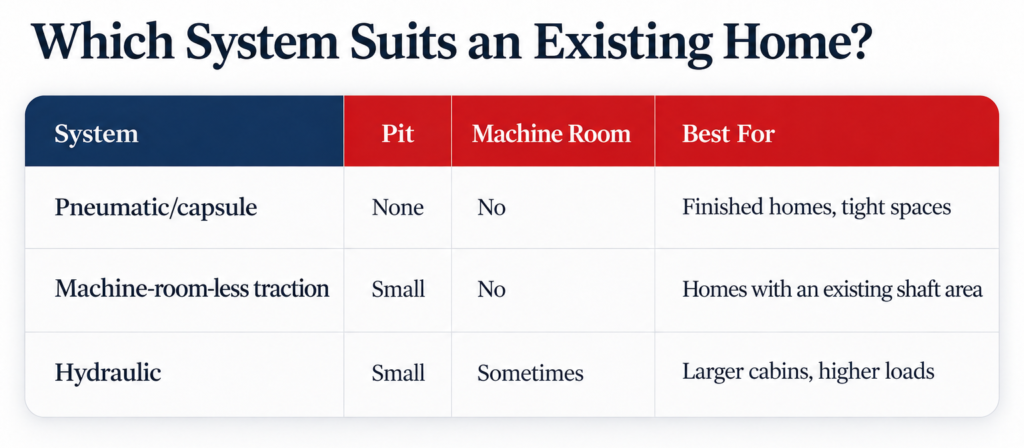
Before adding a lift to a finished house, check five things: available space, structural strength, floor-to-floor height, power supply, and the type of system. Compact pneumatic and capsule lifts suit most existing homes because they need little or no pit and no machine room.
Most people picture a home lift in a new bungalow, planned on paper from day one. But the real demand often comes later, when a parent can no longer manage the stairs in a house you’ve lived in for twenty years. If that’s you, a good home lift manufacturer in Ahmedabad will start with one question: what does your house already offer?
Why Retrofits Need Extra Care
Retrofitting is very doable. It just needs honest checking before anyone quotes a price.
In a new build, the shaft is designed with the structure. In an existing home, the lift has to fit around beams, columns, plumbing and finished floors that already exist.
A typical case: a family wants the lift beside the staircase, but a drainage pipe runs beneath that exact spot. Catching this before work starts saves weeks of rework.
Seven Things to Check First
1. Space and location
Most home lifts need about 4 to 5 feet square, and compact models can fit in roughly 1.2 m by 1.2 m. Common spots are beside the staircase, a store room, or a corner of the living area.
2. Structural condition
Walls, slabs and foundations should safely take the added load. An engineer’s assessment matters more here than any brochure.
3. Pit and overhead height
Decide whether the lift serves two floors now or three later. Planning ahead avoids a second round of civil work.
5. Power and backup
Check the electrical load and confirm battery backup so the lift works during outages.
6. Cabin and door size
Think beyond today. A cabin that suits a walker or wheelchair stays useful for years.
7. Finish and design
Glass, steel or wood finishes should match your interior so the lift doesn’t look added on.
Common Mistakes to Avoid
- Choosing a lift before measuring the actual spot
- Ignoring what lies above and below the shaft area
- Picking the cheapest quote without comparing what’s included
Why Homeowners Choose Gulf Elevators
- Skipping the annual maintenance contract
- Forgetting society or municipal permissions where they apply
Most importantly, ask whether one team manages elevator installation in Ahmedabad from survey to handover. Split responsibility is where delays begin.
Gulf Elevators is a home elevator manufacturer in Ahmedabad, based in Bodakdev and serving homes across Gujarat. We inspect your property in person before recommending a system, because retrofits depend on your layout, not a standard plan.
Our lifts include standard safety features, and we offer annual maintenance contracts to keep them dependable after handover.
Ready to Plan Your Retrofit?
Looking for elevator installation in Ahmedabad? Contact Gulf Elevators today for expert guidance and reliable solutions. Book a free site visit or explore our elevator installation services.
Frequently Asked Questions
Can a home elevator be installed in an existing house?
Yes. Pneumatic and low-pit systems are designed for finished homes and usually avoid heavy structural changes. A site visit confirms what suits your layout, floor heights and available space.
How much space is needed to retrofit a home lift?
Most home lifts need about 4 to 5 feet square. Compact pneumatic models can fit in roughly 1.2 m by 1.2 m. A home lift manufacturer in Ahmedabad will confirm exact needs after measuring.
Do I need to break the floor to install a lift?
Not always. Pneumatic systems need no pit, so the ground floor often stays untouched. Traction and hydraulic systems may need a shallow pit, which depends on the model chosen.
How long does retrofit installation take?
Usually two to four weeks once the space is ready. Extra civil work, such as opening a slab, can add time, so ask for a clear schedule upfront.
Is an existing home strong enough for an elevator?
Most are, but an engineer should check. Some systems are self-supporting, while others rely on the building structure, so the assessment guides the system choice.
Do I need permission to install a lift at home?
Requirements vary by property type and local rules. Apartments and societies may need approval, so confirm with your authority and your installer before starting.